
Terminal-Level Compliance Control Framework
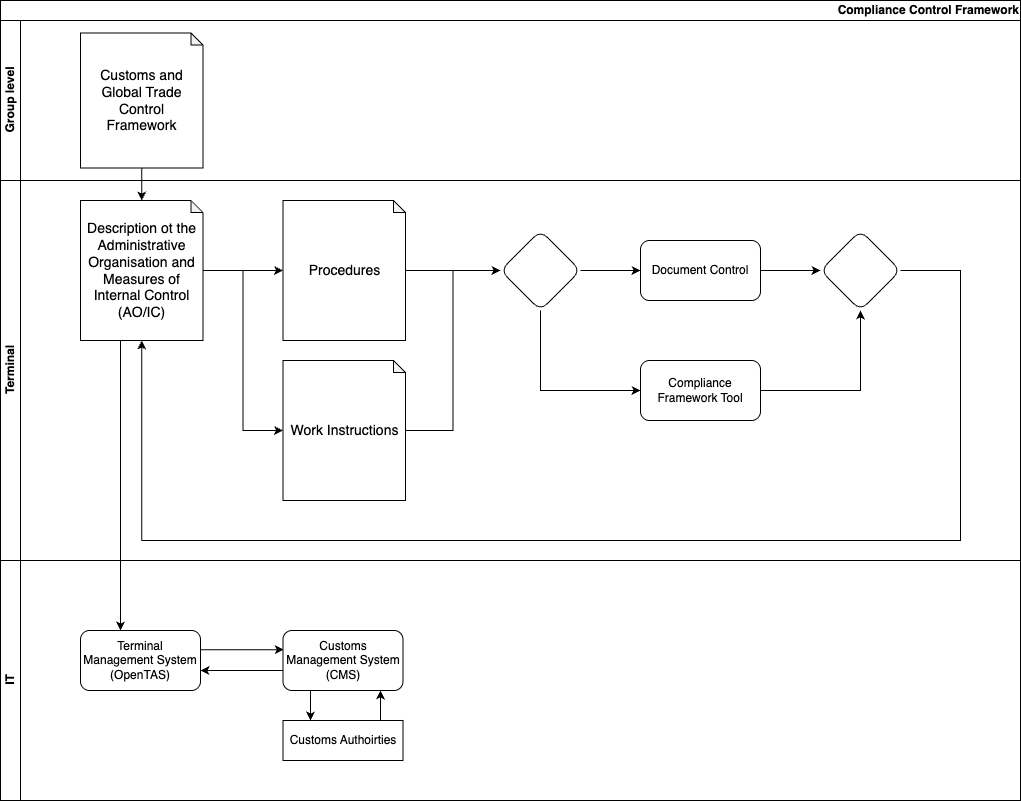
At terminal level, the Customs and Global Trade compliance control framework is structured around a clearly defined Administrative Organisation and Internal Control (AO/IC). This umbrella document outlines how the terminal is organised from a governance, staffing, and internal control perspective, ensuring that the necessary competencies, roles, and responsibilities are in place to meet all customs and excise compliance obligations.
The AO/IC document serves as a foundational requirement for obtaining and maintaining customs and excise licenses. It describes the organisational setup and control measures across key functions, including:
-
The Customer Services and Customs team, responsible for day-to-day customs declarations, EMCS processing, and direct liaison with customs and excise authorities.
-
Operations, which ensures the correct handling, storage, and administration of goods under customs or excise control.
-
The Management Team, accountable for ensuring the overall integrity of the terminal's control environment, adequate resourcing, and escalation of compliance issues when needed.
-
The Compliance Officer, who plays a central role in maintaining the effectiveness of the compliance framework. This role involves overseeing adherence to customs and excise obligations, coordinating the AO/IC review and update process, monitoring internal controls, conducting compliance reviews, and acting as a key point of contact for both internal stakeholders and external regulatory authorities.
To operationalise the AO/IC, the terminal maintains a comprehensive set of detailed procedures and work instructions, governing all relevant customs and excise processes. These documents are managed through a document control system that ensures they are current, version-controlled, and accessible to authorised personnel. This ensures consistency, clarity, and traceability in how procedures are executed and maintained.
-
Centralised documentation and process flow mapping
-
Execution and monitoring of automated internal controls
-
Logging of findings, learnings, and follow-up actions
-
Collaboration tools for effective coordination among teams
-
Dashboards and reporting features to support compliance oversight
Through the integration of a robust AO/IC framework, formalised procedures, strong compliance leadership, and a digital governance platform, the terminal ensures that customs and excise requirements are continuously met, risks are effectively managed, and regulatory licenses are maintained.
No Comments